






How to Choose Bedding and Match Colors for a Cozy, Stylish Bedroom
Your bedroom is more than just a place to sleep—it’s your personal sanctuary, a space where you unwind, recharge, and feel at peace. And nothing transforms a bedroom quite like the right bedding: it sets the tone for the room, impacts your sleep quality, and ties together your decor. But with so many fabric options, styles, and color palettes to choose from, figuring out how to pick the perfect bedding and match its colors can feel overwhelming. Whether you’re revamping your entire bedroom or just updating your sheets, this guide will walk you through choosing comfortable, durable bedding and creating color combinations that feel cohesive, stylish, and uniquely yours.
Part 1: How to Choose the Right Bedding (Comfort First)
Before diving into colors, start with the foundation: choosing bedding that’s comfortable, durable, and suited to your sleep habits. After all, even the most stylish bedding won’t feel like a sanctuary if it’s scratchy, too warm, or falls apart after a few washes. Here’s what to prioritize:
1. Focus on Fabric (The Key to Comfort)
The fabric of your bedding directly impacts how it feels against your skin, how well it regulates temperature, and how long it lasts. Here are the most popular, comfort-focused options for a Euro-American style bedroom:
- Egyptian Cotton: The gold standard for luxury and comfort. Its long fibers create soft, smooth sheets that get softer with each wash, while being breathable and durable—perfect for year-round use. Ideal for a timeless, refined look.
- Linen: A favorite for its relaxed, effortless style. Linen is lightweight, breathable, and moisture-wicking, making it perfect for warm sleepers or summer. Its slight wrinkles add character, fitting perfectly with casual, cozy bedroom vibes.
- Silk: For ultimate indulgence. Silk is ultra-soft, gentle on skin and hair, and regulates temperature (cool in summer, warm in winter). It adds a touch of elegance to any bedroom, great for a sophisticated look.
- Microfiber: A practical, budget-friendly option. It’s soft, hypoallergenic, and low-maintenance—ideal for busy households. Look for high-quality microfiber (tight weave) for better comfort and durability.
2. Consider Your Sleep Habits
Choose bedding based on how you sleep: If you run hot, opt for breathable fabrics like linen or cotton. If you get cold easily, add a lightweight down comforter or a soft fleece blanket. For sensitive skin, avoid harsh fabrics or synthetic blends—stick to natural fibers like cotton, linen, or silk.
3. Prioritize Fit and Durability
Make sure your sheets fit your mattress snugly (look for deep-pocket options if you have a thick mattress or topper) to avoid bunching at night. Check care labels—machine-washable bedding is ideal for easy maintenance, and high-quality stitching ensures your bedding lasts for years.
Part 2: Bedding Color Matching Tips (Stylish & Cohesive)
Once you’ve chosen your bedding fabric, it’s time to pick colors that complement your bedroom decor, reflect your style, and create a calm, inviting atmosphere. The goal is to create a cohesive look—no clashing colors, but enough contrast to keep the space from feeling flat. Here are simple, foolproof color matching rules for any bedroom:
1. Start with a Neutral Base (Safe & Versatile)
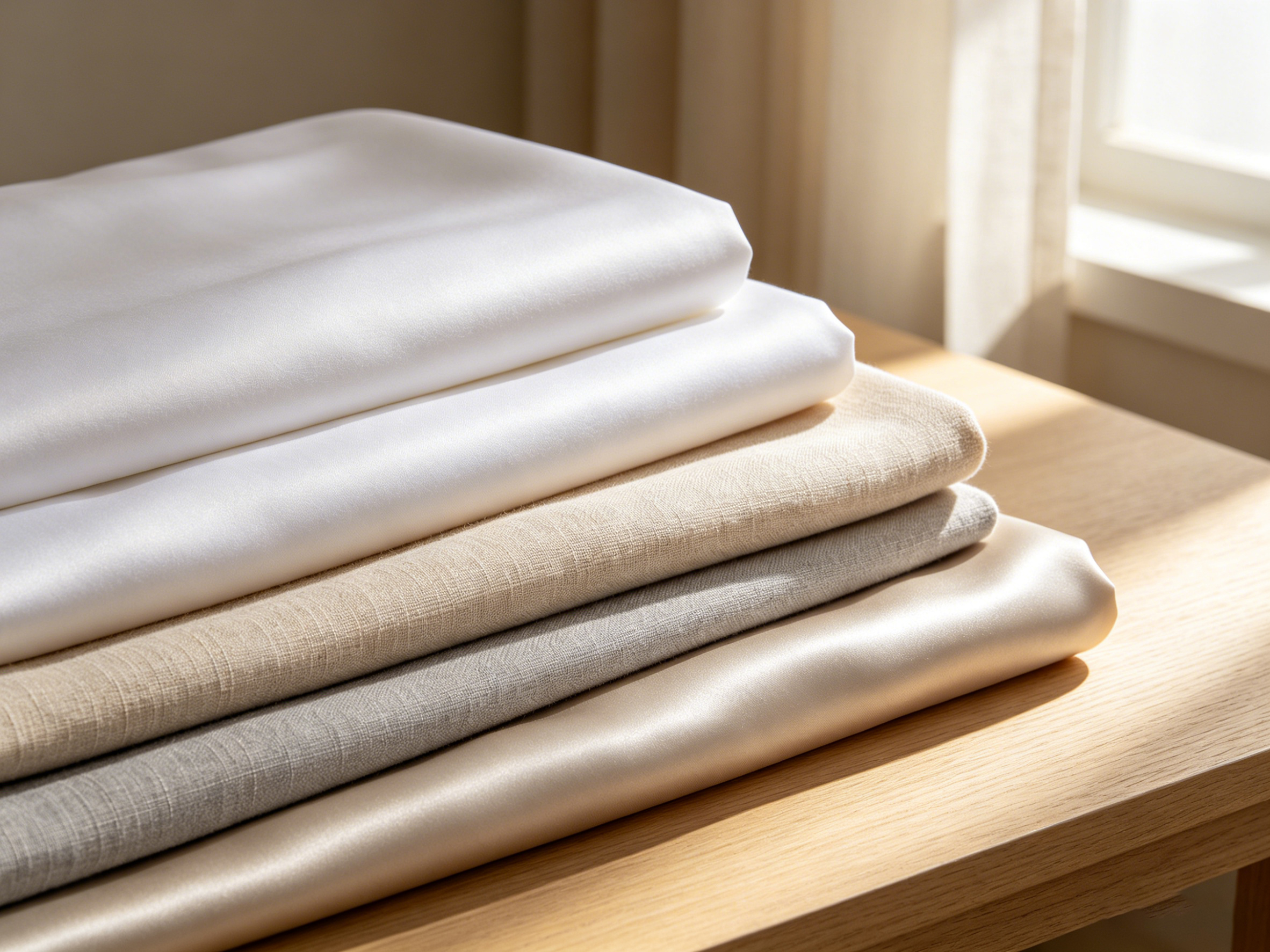
Neutrals are the backbone of a timeless, easy-to-style bedroom. They’re versatile, calming, and work with almost any decor style—from modern minimalism to classic elegance. Opt for neutral bedding (white, cream, beige, light gray, or soft taupe) as your base. Neutral sheets and comforters act as a blank canvas, allowing you to add pops of color with pillows, throws, or curtains.
Pro tip: Mix different neutral shades (e.g., cream sheets + light gray comforter) to add depth without clashing. White bedding is always a classic choice—it feels fresh, clean, and brightens up any room.
2. Use the 60-30-10 Rule (Balance is Key)
The 60-30-10 rule is a design trick that ensures your bedding colors feel balanced, not chaotic: 60% of the color comes from your main bedding (sheets, comforter), 30% from complementary pieces (pillows, blanket), and 10% from small accents (throw pillows, decorative touches). This keeps the space cohesive while adding visual interest.
Example: 60% soft gray comforter + 30% light blue pillowcases + 10% navy throw blanket. The colors complement each other without overwhelming the room.
3. Match to Your Bedroom’s Existing Palette
Your bedding should harmonize with the colors already in your bedroom—walls, curtains, furniture, and decor. If your walls are a soft beige, choose bedding in a similar neutral (cream, light taupe) or a subtle complementary color (pale blue, soft green). If your walls are a bold color (e.g., sage green, muted blue), keep your bedding neutral to avoid clashing.
Pro tip: Pull a color from your curtains or area rug and use it as an accent in your bedding (e.g., a navy rug = navy pillowcases). This ties the entire room together seamlessly.
4. Embrace Contrast (Without Clashing)
Contrast adds visual interest and prevents your bedding from blending into the background. For a subtle contrast, pair light bedding with a slightly darker accent (e.g., white sheets + light gray comforter). For a bolder look, pair complementary colors (colors opposite each other on the color wheel)—but keep it subtle (e.g., soft coral sheets + mint green pillowcases) to avoid feeling overwhelming.
Avoid mixing too many bold colors—stick to 2-3 main colors max to keep the space calm and cohesive.
5. Consider the Mood You Want to Create
Colors have a huge impact on how your bedroom feels—choose bedding colors based on the mood you want to cultivate:
- Calm & Relaxing: Soft blues, greens, neutrals, or pastels. These colors promote relaxation and are perfect for a peaceful sleep space.
- Warm & Cozy: Beige, taupe, soft brown, or warm gray. These colors feel inviting and cozy, ideal for colder climates or bedrooms with less natural light.
- Fresh & Bright: White, cream, light blue, or pale yellow. These colors brighten up the room and feel airy, perfect for bedrooms with lots of natural light.
- Sophisticated & Luxe: Deep navy, charcoal gray, or muted burgundy. Pair these with neutral sheets for a refined, elegant look.
6. Don’t Forget Texture (It Enhances Color)
Texture adds depth to your bedding and makes your color palette feel more dynamic. For example, a white linen comforter (textured) paired with smooth white cotton sheets creates subtle contrast without adding new colors. A knit throw blanket (in a complementary color) adds warmth and texture, tying your color scheme together.
Final Tips for Perfect Bedding & Color Coordination
- Stick to what you love: At the end of the day, your bedding should make you feel happy and comfortable. Don’t follow trends if they don’t align with your style.
- Test before you commit: If you’re unsure about a color, start with a pillowcase or throw blanket before investing in a full bedding set.
- Keep it simple: You don’t need a complicated color scheme—sometimes the most stylish bedrooms are the ones with a neutral base and a few well-chosen accents.
- Choosing the right bedding and matching its colors doesn’t have to be stressful. By prioritizing comfort first (via the right fabric) and following simple color rules, you can create a bedroom that’s not only stylish but also a true sanctuary—one where you look forward to unwinding each night. Remember: your bedding is more than just a decor piece—it’s an investment in your sleep, your comfort, and your daily peace of mind.